This is probably the question I get asked most often before a first appointment. “Doctor, examination toh nahi karni hogi na?” Patients say it with hesitation, sometimes embarrassment. And I completely understand. The anal region is private, and the idea of any examination there feels uncomfortable. But let me explain honestly — why internal piles diagnosis matters, what it actually involves, and when it is truly necessary.
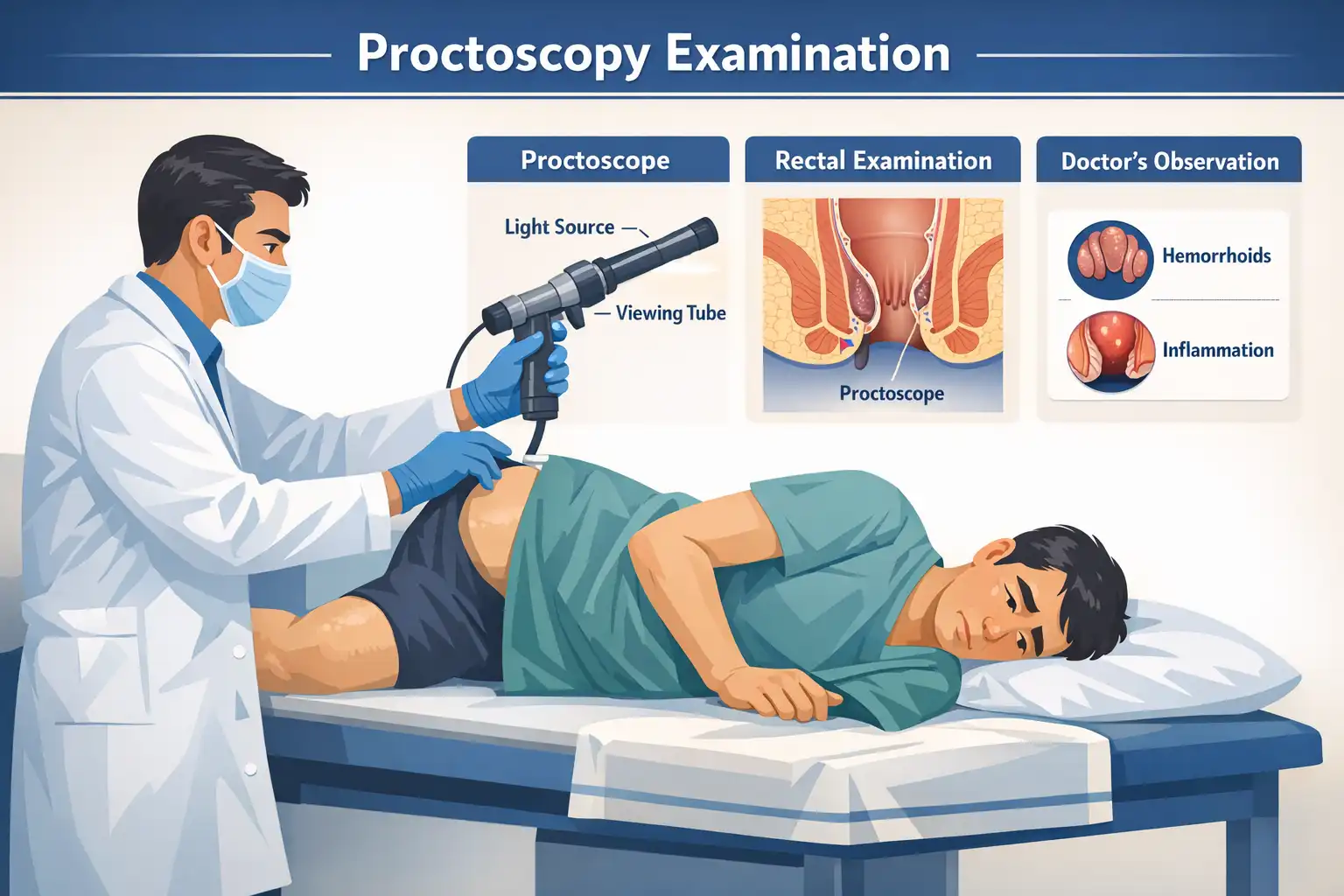
Do You Always Need an Internal Examination to Diagnose Piles?
Not always — but usually yes. External piles can often be seen or felt during a simple visual inspection. But internal piles sit inside the anal canal, above the dentate line, and cannot be seen or felt without an internal examination. For a complete and accurate internal piles diagnosis, some form of internal assessment is almost always needed.
In my experience, when I skip the internal examination based on patient history alone, I miss things. Not always — but enough times that I now consider it a non-negotiable step in new patients. For optimal piles treatment, diagnosis must be complete, not partial.
What Does a Digital Rectal Examination for Piles Actually Feel Like?
A digital rectal examination — where the doctor inserts a gloved, lubricated finger into the rectum — takes about 30 seconds. That is it. It feels like mild pressure. It is not painful in most patients. The discomfort, if any, is brief and much less than what patients imagine beforehand.
I always explain exactly what I am doing before I do it, and I stop if a patient is in severe pain. In my clinic, I have never had a patient say the examination was as bad as they feared. Most are surprised by how quick and manageable it is.
Kya aap bhi yahi soch rahe the ke bahut dard hoga? Almost every patient thinks this before the first visit. Please explore our comprehensive services to understand what a full consultation involves.
What Is the Difference Between a Digital Rectal Exam and a Proctoscopy?
| Digital Rectal Examination | Proctoscopy |
|---|---|
| Finger inserted into rectum | Small hollow tube inserted into anal canal |
| Assesses tone, tenderness, masses | Directly visualises internal haemorrhoids |
| 30 seconds, no equipment needed | 2–3 minutes, uses a proctoscope instrument |
| First-line assessment | Confirms grade and extent of piles |
| Mild pressure sensation | Mild pressure, brief discomfort |
In most patients I see both. The digital exam first, then proctoscopy if needed. Together, they give a complete picture. You can also review diagnostic procedures available for non-invasive assessment in some cases.
When Is an Internal Examination Especially Important for Piles Patients?
In my opinion, internal examination is especially critical in the following situations:
- Rectal bleeding that has been going on more than 2 weeks
- Patients over 40 years old — to rule out polyps or other causes
- Symptoms that are not improving despite treatment
- Any change in bowel habits along with rectal symptoms
- Before any surgical procedure is planned
For surgical approaches and pre-operative assessment, internal examination is always part of the protocol. Also see culturally appropriate care resources for patients who want Urdu-language guidance on what to expect.
Is Internal Piles Diagnosis Painful for Women or Elderly Patients?
This comes up a lot, especially for female patients in Karachi who have privacy concerns. In my practice, I always ensure a chaperone is present, maintain full modesty throughout, and use the gentlest possible technique. Elderly patients sometimes have sphincter tightness or other conditions that require more care — I adjust accordingly.
The key thing I tell all patients — this examination is done to help you. The few seconds of discomfort during an internal examination can prevent months or years of wrong treatment. That trade-off is always worth it. For men’s specialized care and similar resources for women, our clinic has dedicated consultation approaches. Also see specialized hemorrhoid care techniques for what proper examination-guided treatment looks like.
What Happens After the Internal Examination Is Done?
After the examination, I sit with the patient and explain exactly what I found. No medical jargon — just clear, simple language. I tell them the grade of piles if present, whether there are any additional findings, and what treatment options make sense for their case.
In my experience, patients leave that first appointment with much less anxiety than they came in with. Because now they know. They have a diagnosis, a plan, and a clear path forward. That clarity is something no amount of online research or pharmacy advice can give you.
Internal examination is not something to fear. It is something to accept as part of getting the right answer. And the right answer is what leads to the right treatment. Do not let hesitation keep you from that.
Related Reading
- optimal piles treatment
- laser proctology services we offer
- remote piles diagnosis — is it possible
- pre-surgery investigations for piles
- book a specialist consultation
External Resources
🤔 Free Tool
Not Sure What Your Symptoms Mean?
Take our free 10-question symptom checker. Get an instant result — Piles, Fissure, Fistula, or Pilonidal Sinus — with treatment options and estimated cost.
▶ Start the Free Symptom QuizUnder 2 minutes · Free · Instant result · No login required
Book Your Consultation
Considering laser treatment? Let’s talk about your case.
WhatsApp me directly on 0333-2877351. OPD timings: Tuesday, Thursday, Saturday — 5:00 PM to 8:00 PM at Karachi Piles Clinic, in Hill Park General Hospital, Shaheed-e-Millat Road, Karachi. Consultation fee Rs. 2,000.
🔗 Related Articles