Laser Fistulotomy & FiLaC + LIFT — Anal Fistula Treatment in Karachi
I am Dr. Abdullah Iqbal — Pakistan’s first laser proctologist, PMDC Verified #63108-S. At Karachi Piles Clinic, in Hill Park General Hospital, I treat anal fistulas using laser fistulotomy and the FiLaC + LIFT combination: sphincter-preserving laser techniques that close the tract from inside without cutting the sphincter open.
- Laser fistulotomy / FiLaC + LIFT — sphincter-preserving
- Minimal incontinence risk compared to open surgery
- Lower recurrence than conventional fistulotomy
- Complex, high and recurrent fistulas treated
FiLaC + LIFT
Sphincter-Preserving
~85–90%
First Procedure Success
Minimal
Incontinence Risk
Weeks
Typical Healing Time
Understanding the Condition
What Is an Anal Fistula?
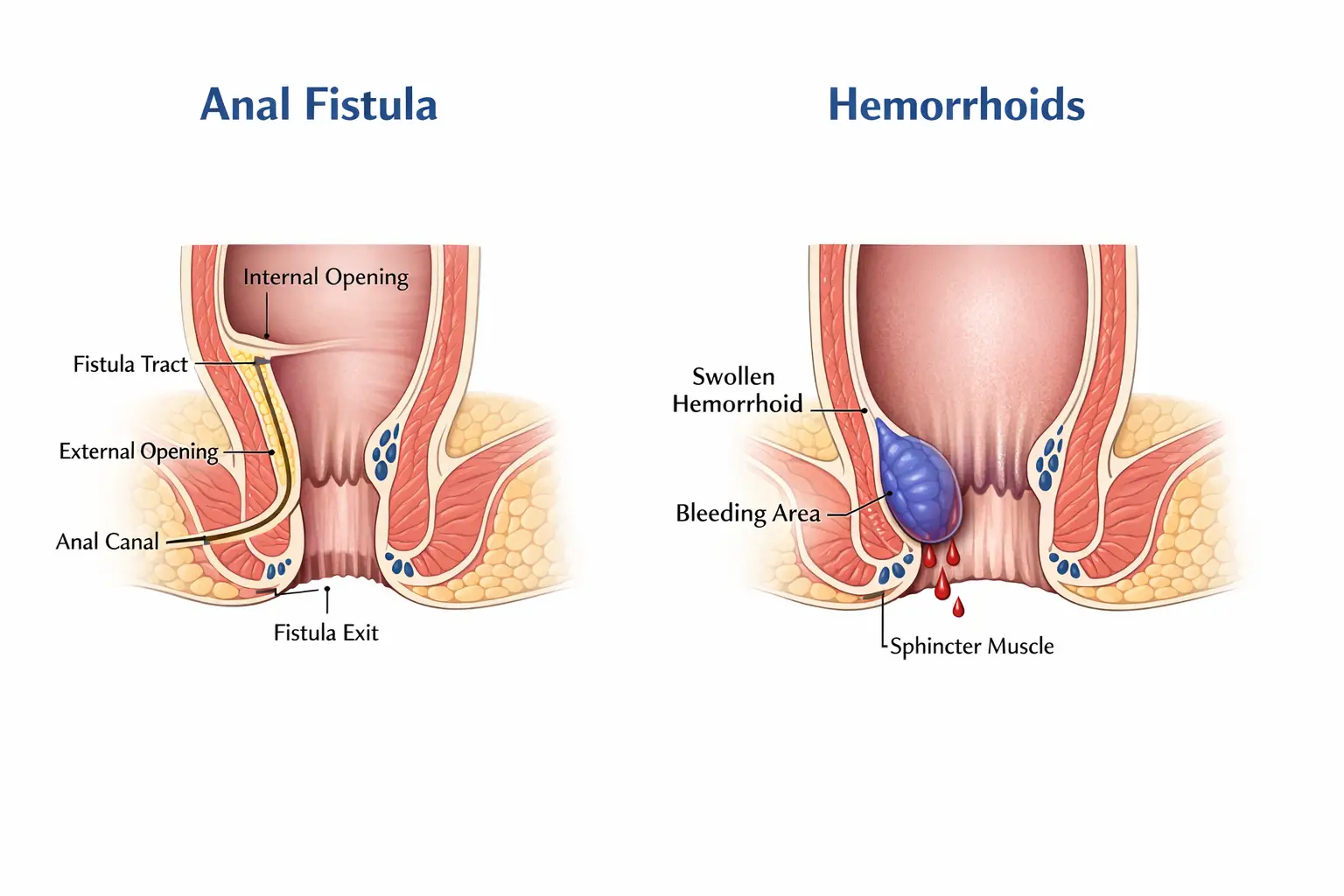
An anal fistula is an abnormal tunnel that forms between the inner lining of the anal canal — usually starting from an infected anal gland — and the skin surface around the anus. The tract fills with debris and infected material, which drains as pus or discharge through a small external opening near the anus.
In my OPD, the typical fistula patient comes in saying “I had piles, but pus keeps coming out.” Piles do not produce pus. If you have recurring pus or discharge in the same spot, you almost certainly have a fistula, not piles — and that distinction completely changes the treatment.
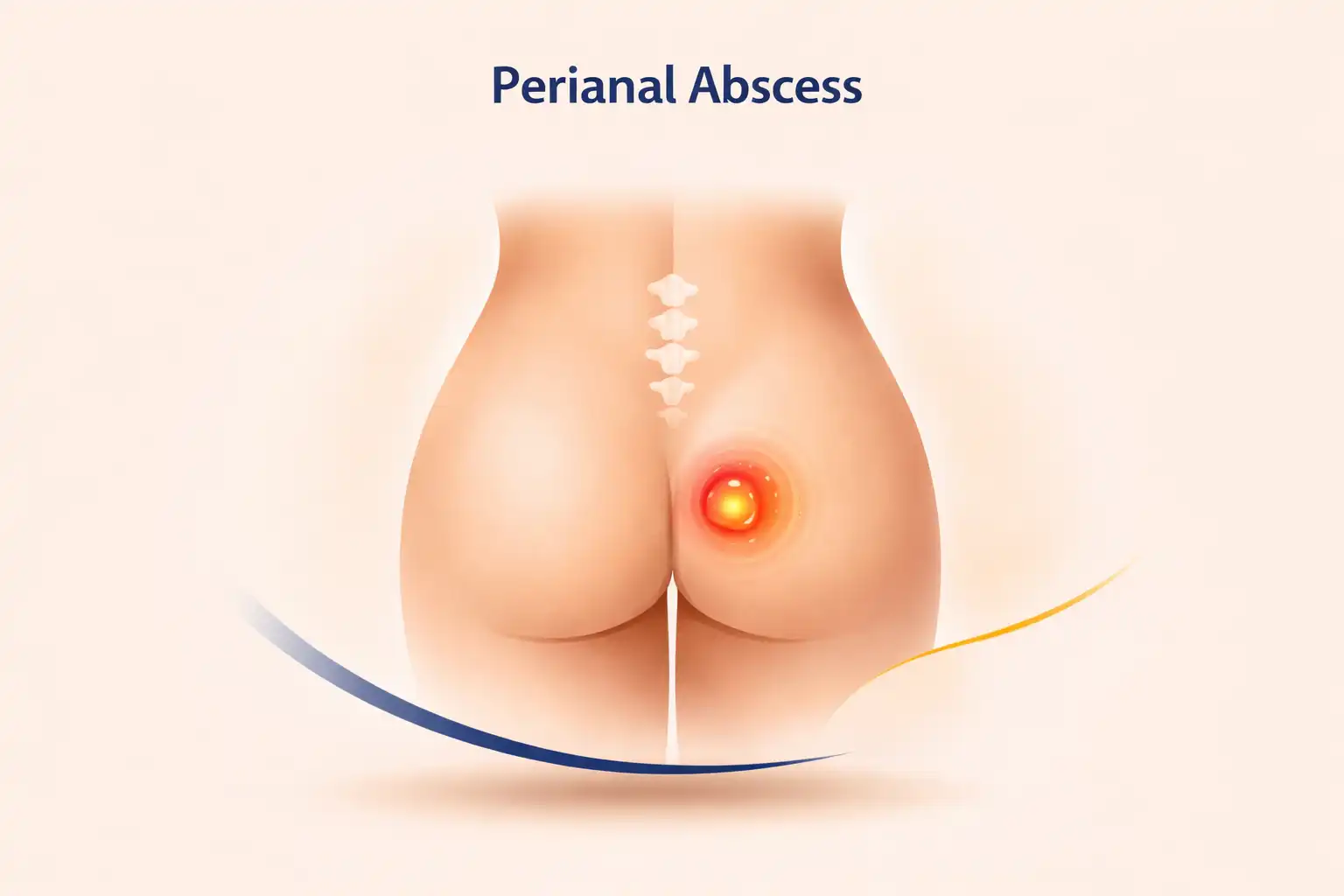
Fistulas typically start as a perianal abscess. Once the abscess drains — surgically or by bursting on its own — the infected tract can persist as a fistula. Without surgical closure, an anal fistula will not heal on its own. It cycles through draining, temporarily closing, swelling again, and re-opening — sometimes for years before patients finally seek specialist care.
In my experience, this is one of the most under-treated conditions I see in Karachi. People live with the daily wetness, smell, and infection cycle because they were told it is “just piles”, or because they are afraid of open fistula surgery.
Medical Point: A fistula is often mistaken for piles. The key distinction: if you have recurring pus or discharge near the anus that keeps coming back, it is almost certainly a fistula — not piles. Piles do not produce pus.
Signs & Symptoms
How Do You Know If You Have a Fistula?
Pus Discharge
Yellow or cloudy discharge near the anus. May be intermittent — draining, stopping, then starting again.
Recurrent Swelling
Swelling near the anus that comes and goes. The swelling fills, bursts, drains, then reforms.
External Opening
A small visible hole or pimple-like opening in the skin near the anus — sometimes more than one.
Pain & Discomfort
Constant low-grade discomfort that worsens when the tract is blocked and pressure builds.
Itching & Wetness
Persistent moisture, itching and skin irritation around the external opening.
Fever
Fever with a blocked, undrained tract means pus is collecting — this is an emergency and needs urgent review.
Fistula Classification
Types of Anal Fistula
Low
Simple Intersphincteric
Crosses the lower portion of the internal sphincter only. The best candidate for FiLaC, with the highest first-procedure success.
High
Trans-sphincteric
Passes through both internal and external sphincters. FiLaC + LIFT preserves continence where open fistulotomy would risk it.
Supra
Suprasphincteric
Passes above the puborectalis muscle. Complex — specialist assessment essential. Staged approach may be needed.
Horse
Horseshoe Fistula
Bilateral extension around the anal canal. The most complex type. In my experience, a staged plan gives the best result.
My Philosophy
Why I Use FiLaC + LIFT for Fistula
Open fistulotomy — cutting the tract and the overlying sphincter open — has been the conventional treatment for decades. It works for simple low fistulas, but for high or trans-sphincteric fistulas the cost can be sphincter damage and incontinence. Setons (a thread left in the tract) avoid that risk but require months of follow-up and often need a second procedure anyway.
When I introduced laser proctology to my practice in 2021, FiLaC + LIFT became my preferred approach for the majority of fistula patients I see. The laser fibre destroys the tract lining from inside as it is withdrawn, while the LIFT component closes the internal opening at the level of the sphincter. The sphincter itself is preserved. Patients can be repeated safely if needed — something open fistulotomy does not allow comfortably. I still use open fistulotomy when it is genuinely the right choice for a simple low fistula, but laser is my first option for everything else.
Dr. Abdullah Iqbal
MBBS · FCPS (General Surgery) · PMDC Verified #63108-S
Pakistan’s first laser proctologist. MBBS from LUMHS (2012), FCPS in General Surgery from CPSP (2018), certified laser proctology training (2021). Internationally trained surgeon. 13+ years of surgical experience with 5+ years dedicated exclusively to laser proctology. Practises at Karachi Piles Clinic, in Hill Park General Hospital.
The Procedure
How I Perform FiLaC + LIFT
01
Assessment & Mapping
MRI or endoanal ultrasound to map the tract length, depth and any branches before planning. Consultation fee Rs. 2,000.
02
Anaesthesia
Local or spinal anaesthesia, depending on the complexity. You feel no pain during the procedure.
03
Laser Fibre Insertion
A thin laser fibre is passed through the fistula tract from the external opening to the internal opening near the anal canal.
04
Laser Closure + LIFT
As the fibre is withdrawn, laser energy destroys the tract lining; the internal opening is closed by the LIFT step — sphincter is preserved throughout.
Treatment Comparison
Laser vs Conventional Fistula Surgery
Traditional fistula surgery (fistulotomy or seton) opens the tract by cutting through the overlying sphincter. For low simple fistulas this is acceptable; for high or trans-sphincteric fistulas, this approach carries real continence risk. FiLaC + LIFT preserves the sphincter while still closing the tract.
FiLaC + LIFT (KPC)
- Sphincter preserved — not cut
- Minimal incontinence risk in my experience
- Minimally invasive — no large external wound
- Day-care or short admission
- Suitable for complex and recurrent fistulas
- Shorter post-operative healing time
- Can be repeated safely if needed
Conventional Open Surgery
- Fistulotomy cuts through the sphincter
- Real incontinence risk, especially for high fistulas
- Large open wound requiring dressings
- Wound healing in weeks to months
- Often not suitable for complex / high fistulas
- Recurrence still possible
- Repeating not always comfortable
Recovery
What to Expect After FiLaC + LIFT
FiLaC + LIFT recovery is noticeably more comfortable than open fistula surgery in my experience. Because there is no large external wound, most patients heal faster and with less pain. Here is the typical post-procedure timeline I share at consultation.
Days 1–3
Discharge & Rest
Most patients go home the same day or the day after. Light activity only.
Week 1–2
Wound Care
Perianal hygiene maintained. Sitz baths twice daily. Light walking encouraged.
Week 2–4
Back to Routine
Return to desk work and routine activity for most patients. Avoid heavy exertion.
Week 6–8
Follow-up
Examination confirms tract closure. A second procedure is offered if needed.
Recovery varies per patient and per fistula type. These timelines are general estimates. Your post-operative instructions will be personalised at consultation based on the classification and complexity of your fistula.
Transparent Pricing
Laser Fistula Treatment Cost in Karachi
I believe in transparent pricing — you should know what you will pay before you book. The standard range below covers the procedure itself (laser fistulotomy or FiLaC + LIFT), anaesthesia, day-care use of the operating theatre at Hill Park General Hospital, and routine follow-up.
Laser Fistulotomy / FiLaC + LIFT
Rs. 150,000 – 250,000
Final cost depends on the type and complexity of the fistula (simple intersphincteric vs trans-sphincteric vs horseshoe), confirmed after MRI/ultrasound mapping at consultation. Consultation fee Rs. 2,000.
Fistula pricing varies more than other procedures because the underlying anatomy varies more — a simple low fistula is much shorter work than a horseshoe fistula. I quote a firm figure at the end of consultation, once I have the imaging in hand.
Insurance & Panels
Does Insurance Cover Laser Fistula Treatment?
In most cases, yes. Laser fistula treatment — whether laser fistulotomy or FiLaC + LIFT — is a medically necessary surgical procedure for a diagnosed fistula, which makes it claimable under most individual and corporate health policies. Karachi Piles Clinic supports claims with EFU Life, Jubilee, Adamjee, IGI, State Life, Askari General, TPL and Habib Insurance, and the corporate panels these companies administer.
Because fistula cost depends on the type and complexity of the tract, your insurer’s pre-authorisation is based on the confirmed procedure and any imaging. The MRI or ultrasound mapping used to plan a complex fistula may also be claimable, depending on your policy. With a cashless (panel) claim the insurer settles directly with the facility after pre-authorisation; with reimbursement you pay first and claim back with your consultation note, imaging report, cost estimate and discharge summary. The Rs. 2,000 consultation fee may sit outside cover.
To verify your cover, send your insurance card or policy number on WhatsApp to 0333-2877351, or read the full insurance panels and claims guide.
My Approach
How a Consultation Works at Karachi Piles Clinic
Karachi Piles Clinic operates inside Hill Park General Hospital on Shaheed-e-Millat Road. My OPD runs Tuesday, Thursday and Saturday from 5:00 PM to 8:00 PM. Consultation fee is Rs. 2,000. WhatsApp 0333-2877351 to book.
At the first visit I take a full history, examine the perianal area carefully, and assess the external openings and any tracts. For most fistulas, I order an MRI or endoanal ultrasound to map the tract before recommending a procedure — treating a fistula blind is the leading cause of recurrence. Once I have the imaging, I explain whether laser fistulotomy or FiLaC + LIFT is appropriate, what the expected success rate is for your specific fistula type, and the realistic cost.
Patients travel from across Pakistan and overseas for fistula treatment at Karachi Piles Clinic. For patients outside Karachi, I offer WhatsApp video teleconsultation to review existing imaging and reports before you travel for the procedure.
Common Questions
Frequently Asked Questions About Anal Fistula
Can a fistula heal without surgery?
No. A fistula does not close permanently with antibiotics or creams alone. The tract has to be surgically closed or destroyed. FiLaC + LIFT achieves closure while preserving the sphincter.
What is the success rate of FiLaC + LIFT?
First-procedure success is approximately 85–90% for simple intersphincteric fistulas in published series. Complex or high fistulas have a lower first-time success rate and may need a staged approach. A second procedure is offered if the first is incomplete.
Is there a risk of incontinence?
FiLaC + LIFT is specifically designed to preserve the sphincter — that is the main advantage over conventional fistulotomy. In my experience, incontinence risk is minimal. Open fistulotomy of a high fistula carries a much higher continence risk by comparison.
Is laser fistula treatment painful?
The procedure is done under local or spinal anaesthesia — you feel no pain during it. Afterwards, most patients describe mild discomfort that responds to simple painkillers, far less than open fistulotomy with its large external wound.
How much does laser fistula treatment cost in Karachi?
At Karachi Piles Clinic, laser fistulotomy and FiLaC + LIFT cost Rs. 150,000 to Rs. 250,000 depending on type and complexity (simple vs trans-sphincteric vs horseshoe). The fee includes procedure, anaesthesia and routine follow-up. Final cost is confirmed after imaging at consultation.
How do I know if I have a fistula or piles?
Piles produce blood and mucus. Fistulas produce pus and have one or more visible external openings in the skin near the anus. If you have recurring pus discharge that keeps coming back in the same spot, it is almost certainly a fistula, not piles.
Where is Karachi Piles Clinic located?
Karachi Piles Clinic is inside Hill Park General Hospital on Shaheed-e-Millat Road, Karachi Memon Society, Karachi 75350. My OPD runs Tuesday, Thursday and Saturday, 5:00 PM to 8:00 PM. Closed Sunday.
Are you PMDC-verified?
Yes. My PMDC registration number is 63108-S. I hold MBBS from LUMHS (2012), FCPS in General Surgery from CPSP (2018), and certified laser proctology training (2021).
Other Services
Related Treatments at KPC
Book Your Consultation
I will examine you, order the imaging that maps your fistula, and recommend the right treatment honestly — whether that is FiLaC + LIFT, laser fistulotomy, or a staged approach. WhatsApp 0333-2877351 · Tue / Thu / Sat 5–8 PM · Karachi Piles Clinic, Hill Park General Hospital.
🧠 Not sure of your diagnosis?
Take the Free 2-Minute Symptom Quiz
Answer 10 simple questions and find out whether you have Piles, Fissure, Fistula, Pilonidal Sinus or a Perianal Abscess — with an instant result and estimated treatment cost.
🦥 Start the Symptom Quiz →