Sinus Laser Closure — Pilonidal Sinus Treatment in Karachi
I am Dr. Abdullah Iqbal — Pakistan’s first laser proctologist, PMDC Verified #63108-S. At Karachi Piles Clinic, in Hill Park General Hospital, I treat pilonidal sinus using Sinus Laser Closure: a minimally invasive day-care procedure that obliterates the sinus tract from inside, without the large open wound and weeks of recovery that come with conventional excision.
- Sinus Laser Closure — no open excision
- Lower recurrence than conventional excision in published series
- No large open wound to dress or heal
- Day-care procedure — home the same day
Day-care
No Hospital Admission
Low
Recurrence in Published Data
Same Day
Discharge
16–35
Most Common Age
Understanding the Condition
What Is Pilonidal Sinus?
Pilonidal sinus is a chronic condition involving one or more small sinuses (tunnels) in the skin at or near the top of the buttock cleft, just below the coccyx (tailbone). The name comes from Latin: pilus (hair) and nidus (nest). The sinuses typically form around ingrown hair and debris that become trapped in the skin, triggering a foreign-body reaction and infection.
In my OPD, the typical pilonidal patient is a young male between 16 and 35 — often someone with coarse body hair and a job or lifestyle that involves long hours of sitting. Drivers, students, IT professionals and bank staff are the patient profiles I see most often.
Once infected, pilonidal sinus causes an abscess — a painful, swollen, pus-filled cavity. If untreated or incompletely treated, it becomes chronic: repeatedly infecting, draining, healing partially, then infecting again. Many patients I see have been through this cycle multiple times before they finally come in for definitive treatment.
Conventional treatment has been open surgical excision — a large wound that takes weeks to heal and keeps patients off their feet (and out of work) for a long time. That is the main reason I switched my practice to Sinus Laser Closure: the recovery is on a different scale entirely.
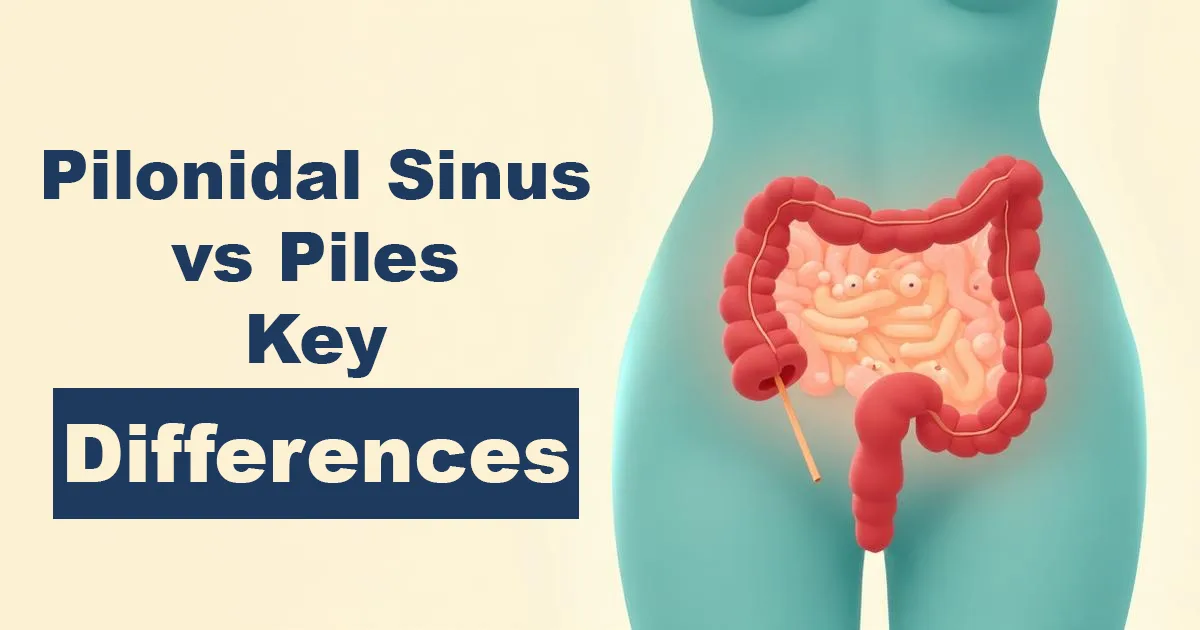
Medical Point: Pilonidal sinus is frequently confused with piles because both can cause pain and swelling. The distinction: pilonidal sinus is located at the top of the buttock cleft near the tailbone — not at the anal opening. Pain while sitting is the hallmark complaint.
Signs & Symptoms
How Do You Know If You Have Pilonidal Sinus?
Tailbone Area Pain
Pain near the top of the buttock crease or coccyx area, worsening when sitting or driving for extended periods.
Swelling & Redness
A visible lump or swelling at the top of the natal cleft, sometimes warm and tender to touch.
Pus Discharge
Yellow or blood-stained discharge from one or more openings near the tailbone area.
Recurrent Abscess
Swelling that fills with pus, bursts or is surgically drained, then reforms weeks or months later.
Small Pits or Openings
Visible small holes or pits in the skin of the natal cleft, sometimes with hair seen entering.
Fever
Fever with a blocked, undrained sinus means pus is collecting — this needs urgent review.
Pilonidal Sinus Classification
Types of Pilonidal Sinus
Acute
Pilonidal Abscess
Sudden painful infected swelling. Needs urgent incision and drainage first; I perform Sinus Laser Closure after the acute phase settles.
Chronic
Recurring Sinus
Repeated infection-drainage cycles with a single or multiple sinus tracts. In my experience, the best candidate group for Sinus Laser Closure.
Complex
Multiple Tracts
Multiple branching sinuses. I map these carefully before the procedure; a staged approach is sometimes needed.
Recurrent
Post-Op Return
Previously operated sinus that has come back. Sinus Laser Closure can still be offered, and is often gentler than re-doing an open excision.
My Philosophy
Why I Use Sinus Laser Closure
Conventional treatment of chronic pilonidal sinus is wide surgical excision — Karydakis flap, Bascom, or open healing — and it works. The cost, however, is a large external wound, weeks to months of wound care, time off work, and an unavoidable period when the patient cannot sit comfortably. For a 22-year-old student or a 28-year-old driver, that is a huge ask.
When I introduced laser proctology to my practice in 2021, Sinus Laser Closure became my preferred first-line approach for chronic and recurrent pilonidal sinus. The laser fibre is passed through the existing sinus tract under anaesthesia; as it is withdrawn, laser energy obliterates the sinus lining and collapses the tract. There is no large excision and no large wound. Most patients I treat are sitting normally within a couple of weeks, not a couple of months. I still recommend open excision in the small number of cases where it is genuinely the right choice — very wide, fungating disease, for example — but for most chronic sinuses I see, laser is the better starting point.
Dr. Abdullah Iqbal
MBBS · FCPS (General Surgery) · PMDC Verified #63108-S
Pakistan’s first laser proctologist. MBBS from LUMHS (2012), FCPS in General Surgery from CPSP (2018), certified laser proctology training (2021). Internationally trained surgeon. 13+ years of surgical experience with 5+ years dedicated exclusively to laser proctology. Practises at Karachi Piles Clinic, in Hill Park General Hospital.
The Procedure
How I Perform Sinus Laser Closure
01
Assessment & Mapping
Physical examination and mapping of the sinus tracts. Fistulography or ultrasound for complex cases. Consultation fee Rs. 2,000.
02
Anaesthesia
Local or spinal anaesthesia. No general anaesthesia required for standard cases. You feel no pain during the procedure.
03
Probe & Laser Fibre
A probe is passed through the sinus from opening to opening. A laser fibre then follows the probe through the tract.
04
Laser Closure
As the fibre is slowly withdrawn, laser energy obliterates the sinus lining, collapsing and sealing the tract.
Treatment Comparison
Laser vs Conventional Excision
Open surgical excision (Karydakis, Bascom, or open healing) and Sinus Laser Closure share the same end goal — eliminate the sinus tract so it stops infecting. They differ enormously in what the patient experiences after the operation, which is why I almost always start the conversation with laser.
Sinus Laser Closure (KPC)
- No large open wound to heal
- No sutures required in most cases
- Same-day discharge
- Back to routine activity in 1–2 weeks for most patients
- Lower recurrence in published series
- Suitable for complex and recurrent sinuses
- Can be repeated safely if needed
Conventional Open Excision
- Large wound excision — weeks to heal
- Prolonged wound dressings required
- Significant time off work
- Higher recurrence in published series
- Significant post-operative pain
- Long period of daily wound care
- Cannot sit comfortably for weeks
Recovery
What to Expect After Sinus Laser Closure
Recovery from Sinus Laser Closure is noticeably faster than open pilonidal excision in my experience. Because there is no large external wound, most patients are mobile within days. Here is the typical post-procedure timeline I share at consultation.
Same Day
Home
Most patients are discharged within 3–4 hours of the procedure.
Days 1–3
Minimal Activity
Light activity only. A small dressing over the entry point.
Week 1–2
Back to Routine
Most patients return to desk work in 7–10 days. Avoid prolonged sitting.
Week 4–6
Full Healing
Laser entry point fully healed. Follow-up confirms tract closure.
Recovery varies per patient and per sinus complexity. These timelines are general estimates. Your post-operative instructions will be personalised at consultation based on the extent of the sinus and your overall health.
Transparent Pricing
Sinus Laser Closure Cost in Karachi
I believe in transparent pricing — you should know what you will pay before you book. The standard range below covers the procedure itself, anaesthesia, day-care use of the operating theatre at Hill Park General Hospital, and routine follow-up.
Sinus Laser Closure
Rs. 150,000 – 180,000
Final cost depends on the complexity of the sinus (single tract vs multiple/branching, primary vs recurrent), confirmed after assessment at consultation. Consultation fee Rs. 2,000.
Patients comparing prices should know: the laser fee includes the cost of laser device consumables, which is why it is higher than open excision. What you save is weeks of wound care, time off work, and the period when sitting is uncomfortable.
Insurance & Panels
Can I Claim Insurance for Pilonidal Sinus Surgery?
In most cases, yes. Sinus Laser Closure for a diagnosed pilonidal sinus is a medically necessary surgical procedure, which makes it eligible under most individual and corporate health policies — including recurrent cases, which are generally still covered. Karachi Piles Clinic supports claims with EFU Life, Jubilee, Adamjee, IGI, State Life, Askari General, TPL and Habib Insurance, plus the corporate panels these insurers administer.
You can use your policy two ways. A cashless (panel) claim means your insurer settles the bill directly with the facility after pre-authorisation, so you pay little or nothing upfront. Reimbursement means you pay first, then claim back with your invoices and discharge summary, within your policy limits. Employer and corporate group panels often cover this procedure fully. The Rs. 2,000 consultation fee and certain non-medical items may fall outside cover, so you receive a written estimate before booking.
To confirm your specific cover, send your insurance card or policy number on WhatsApp to 0333-2877351, or read our complete insurance panels and claims guide.
My Approach
How a Consultation Works at Karachi Piles Clinic
Karachi Piles Clinic operates inside Hill Park General Hospital on Shaheed-e-Millat Road. My OPD runs Tuesday, Thursday and Saturday from 5:00 PM to 8:00 PM. Consultation fee is Rs. 2,000. WhatsApp 0333-2877351 to book.
At the first visit I examine the natal cleft, identify the sinus openings, and assess whether the sinus is simple, complex, primary or recurrent. For complex or recurrent disease I order fistulography or ultrasound to map the tracts before recommending a procedure. If the sinus is acutely abscessed, I drain it first and schedule Sinus Laser Closure once the acute phase settles — treating laser into active pus is not a recipe for success.
Patients travel from across Pakistan and overseas for pilonidal treatment at Karachi Piles Clinic. For patients outside Karachi, I offer WhatsApp video teleconsultation to review existing imaging and reports before you travel for the procedure.
Common Questions
Frequently Asked Questions About Pilonidal Sinus
Can pilonidal sinus heal without surgery?
A pilonidal abscess can be temporarily relieved by draining it, but the underlying sinus tract will not heal lastingly without being surgically closed or destroyed. Antibiotics alone do not close the tract.
Will pilonidal sinus come back after Sinus Laser Closure?
Recurrence is uncommon with Sinus Laser Closure in published series, and is generally lower than the recurrence rate reported for open excision. Keeping the area clean, shaved as advised, and following post-operative hygiene reduces risk further.
Is Sinus Laser Closure painful?
The procedure is done under local or spinal anaesthesia — you feel no pain during it. Afterwards, discomfort is significantly less than after open excision because there is no large external wound. Most patients manage with simple oral painkillers.
Is pilonidal sinus related to piles?
No. Pilonidal sinus is located near the tailbone (coccyx), not at the anal opening. They are separate conditions treated differently. Both are managed at Karachi Piles Clinic, which is why patients sometimes find us looking for one and end up with the other diagnosis.
How much does Sinus Laser Closure cost in Karachi?
At Karachi Piles Clinic, Sinus Laser Closure costs Rs. 150,000 to Rs. 180,000 depending on the complexity of the sinus (single tract vs multiple, primary vs recurrent). The fee includes procedure, anaesthesia and routine follow-up. Final cost is confirmed after assessment.
What if my pilonidal sinus is currently infected?
If you have an acute abscess, the first step is incision and drainage to release the pus — this is sometimes done the same day as your visit. Sinus Laser Closure is then scheduled once the acute infection settles, usually a few weeks later, to definitively close the tract.
Where is Karachi Piles Clinic located?
Karachi Piles Clinic is inside Hill Park General Hospital on Shaheed-e-Millat Road, Karachi Memon Society, Karachi 75350. My OPD runs Tuesday, Thursday and Saturday, 5:00 PM to 8:00 PM. Closed Sunday.
Are you PMDC-verified?
Yes. My PMDC registration number is 63108-S. I hold MBBS from LUMHS (2012), FCPS in General Surgery from CPSP (2018), and certified laser proctology training (2021).
Other Services
Related Treatments at KPC
Book Your Consultation
I will examine you, map the sinus if needed, and recommend the right treatment honestly — whether that is Sinus Laser Closure, urgent drainage of an abscess first, or in select cases, open excision. WhatsApp 0333-2877351 · Tue / Thu / Sat 5–8 PM · Karachi Piles Clinic, Hill Park General Hospital.
🧠 Not sure of your diagnosis?
Take the Free 2-Minute Symptom Quiz
Answer 10 simple questions and find out whether you have Piles, Fissure, Fistula, Pilonidal Sinus or a Perianal Abscess — with an instant result and estimated treatment cost.
🦥 Start the Symptom Quiz →