Perianal Abscess Treatment in Karachi — Drainage & Management
A perianal abscess is a collection of pus near the anal opening caused by an infected anal gland. It is extremely painful and rapidly worsens without surgical drainage. Karachi Piles Clinic provides urgent same-day assessment and drainage — preventing progression to fistula.
- Same-day urgent assessment available
- Surgical drainage under local anaesthesia
- Reduces risk of fistula formation if treated early
- Post-drainage monitoring to prevent recurrence
Urgent
Same-Day Assessment
50%+
Develop Fistula If Untreated
30 min
Drainage Procedure
Days
Rapid Pain Relief After Drainage
Understanding Perianal Abscess
What Is Perianal Abscess?
A perianal abscess is an acute infection and collection of pus in the soft tissue around the anal canal and rectum. It originates from an infected anal gland — tiny glands in the anal canal that can become blocked and infected, allowing bacteria to spread into the surrounding fat tissue where the pus cavity forms.
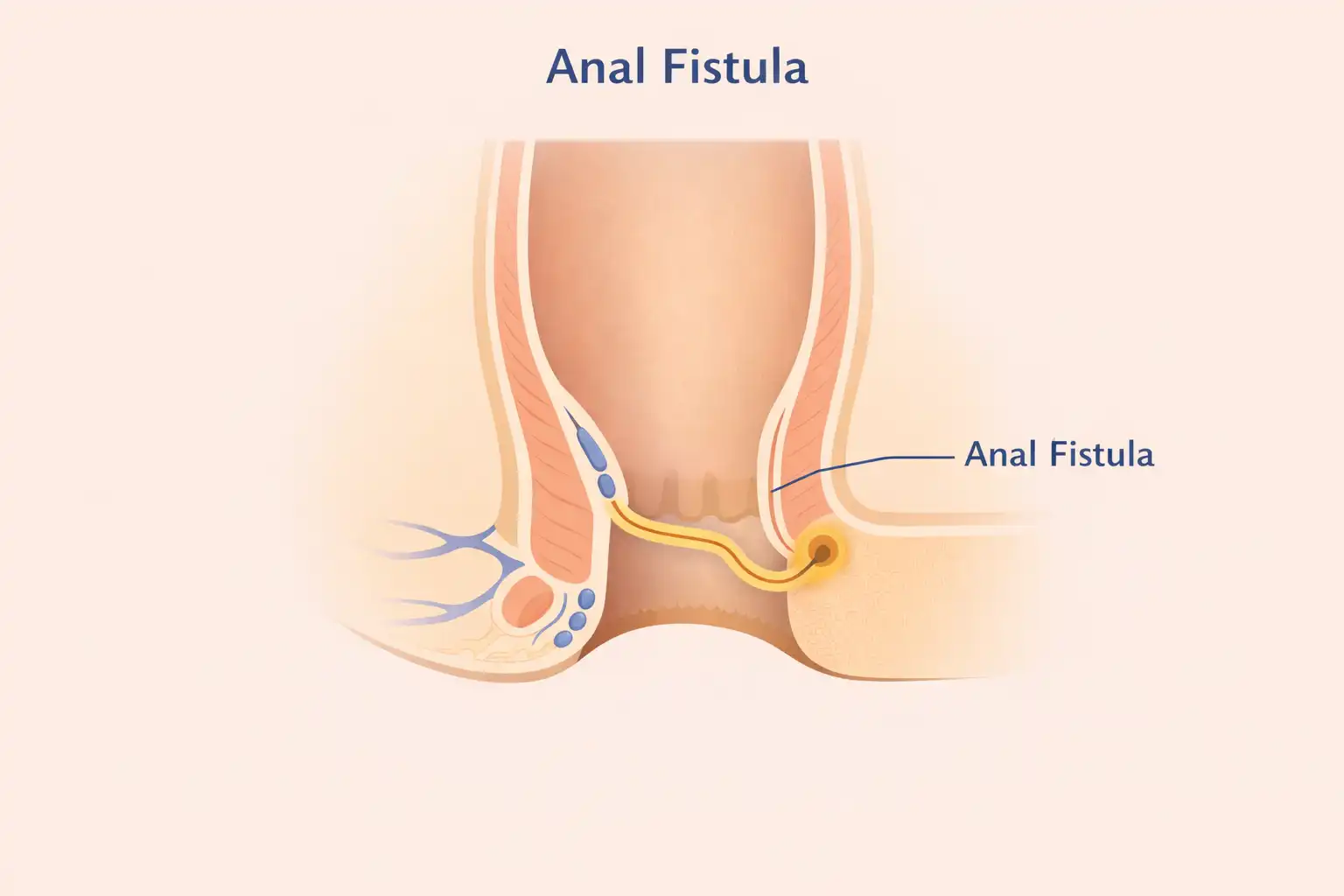
Perianal abscesses are surgical emergencies. They do not resolve with antibiotics alone — the pus must be surgically drained. Without drainage, the abscess enlarges, becomes increasingly painful, and in over 50% of cases, a fistula-in-ano (infected tunnel) will develop between the original abscess cavity and the anal canal or skin surface. Early drainage is the single most important factor in preventing fistula formation.
Medical Point: A perianal abscess should be treated as urgent. Delay worsens pain exponentially, increases the risk of developing a permanent fistula, and can in rare cases lead to necrotising fasciitis (spreading deep infection). Do not wait for a routine appointment.
Signs & Symptoms
Recognising Perianal Abscess
Severe Constant Pain
Throbbing, constant pain near the anus that is not related to bowel movement. Worsens with sitting, walking or any pressure.
Hot Swelling
A red, warm, tender swelling visible near the anal opening. The overlying skin may look stretched and shiny.
Fever
Temperature above 38°C accompanying perianal pain indicates active infection. Seek urgent care immediately.
Difficulty Sitting
The pain is severe enough that sitting is impossible. Walking may also be limited.
Pus Discharge
In some cases the abscess bursts spontaneously, releasing pus. This gives temporary relief but the underlying infected cavity remains.
Feeling Unwell
Systemic symptoms — chills, fatigue, loss of appetite — may accompany a large or deep abscess.
Types of Perianal Abscess
Location-Based Classification
Perianal
Most Common
Directly under the skin around the anal verge. Most accessible for drainage. 60% of all anal abscesses.
Ischiorectal
Larger Space
In the fat space beside the rectum. Often larger cavity, requires careful drainage to avoid damage.
Intersphincteric
Between Muscles
Between the internal and external sphincter muscles. More complex to drain. Specialist required.
Supralevator
Deep & Rare
Above the levator ani muscle. Rare but serious. May require CT or MRI for mapping before drainage.
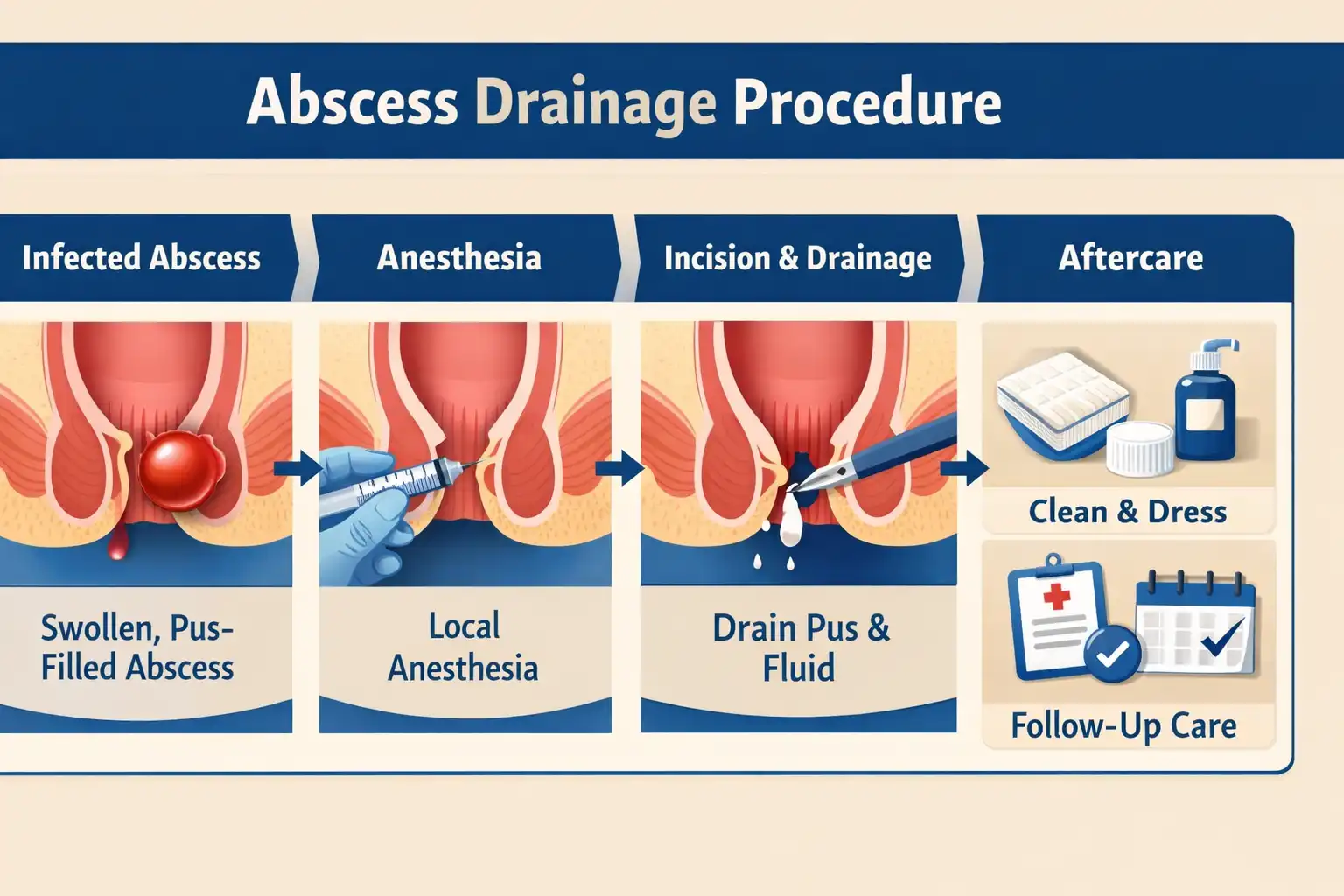
The Procedure
How Is Incision & Drainage Performed?
01
Urgent Assessment
Clinical examination confirms abscess location, size and depth. Same-day drainage arranged in most cases.
02
Anaesthesia
Local anaesthesia for smaller abscesses. Spinal or sedation for larger, deeper cavities. No general anaesthesia needed.
03
Incision & Drainage
A precise incision is made over the abscess. Pus is fully evacuated and the cavity is irrigated. A small drain or packing may be placed.
04
Post-Op Care
Wound care instructions given. Follow-up in 48-72 hours. Monitoring for fistula development at 6-week review.
Treatment Comparison
Laser vs Conventional Treatment
Perianal abscess is not primarily a laser procedure — it requires surgical drainage. However, early, expertly performed drainage significantly reduces the risk of developing a fistula, which would then require FiLaC laser treatment.
Laser Treatment (KPC)
- Specialist drainage by dedicated proctologist
- Minimal tissue damage with precise technique
- Post-drainage fistula surveillance included
- Same-day FiLaC available if fistula identified
- Reduced recurrence with specialist follow-up
- Clear post-operative care protocol
- Urgent care available — no long waiting
Conventional Open Surgery
- General drainage in non-specialist settings
- Incomplete drainage leads to recurrence
- No fistula surveillance after drainage
- Delayed fistula detection — returns months later
- Re-admission and repeat procedures needed
- Higher complication rates without proctology expertise
- Patients not warned about fistula risk
Transparent Pricing
Perianal Abscess Drainage Cost in Karachi
I believe in transparent pricing — you should know what you will pay before treatment. The standard range below covers the incision and drainage procedure itself, anaesthesia, day-care use of the operating theatre at Hill Park General Hospital, and routine follow-up to check for fistula formation.
Incision & Drainage (Same-Day)
Rs. 130,000 – 150,000
Final cost depends on the size, depth and location of the abscess (perianal vs ischiorectal vs deeper), and whether a fistula is identified and treated at the same time. Confirmed after assessment. Consultation fee Rs. 2,000.
Because an abscess is an urgent problem, drainage is usually arranged the same day. If a fistula is found, FiLaC laser treatment can be discussed separately — that is a different procedure with its own cost.
Insurance & Panels
Is Abscess Drainage Covered by Insurance?
In most cases, yes. Incision and drainage of a perianal abscess is an urgent, medically necessary procedure, and most individual and corporate health policies cover emergency surgical treatment — often under emergency provisions that bypass the usual waiting period. Karachi Piles Clinic supports claims with EFU Life, Jubilee, Adamjee, IGI, State Life, Askari General, TPL and Habib Insurance, along with the corporate panels these companies administer.
There are two ways to use your policy. With a cashless (panel) claim, your insurer settles the bill directly with the facility after pre-authorisation. Because an abscess often needs same-day drainage, there may not be time to arrange cashless approval in advance — so reimbursement is common: you pay for the urgent procedure, keep all original invoices and the discharge summary, and claim the amount back according to your policy limits. Keeping the original receipts safe is essential for an abscess reimbursement claim.
To check your cover or arrange pre-authorisation where time allows, send your insurance card or policy number on WhatsApp to 0333-2877351. You can also read our full guide to insurance panels, cashless claims and reimbursement.
Recovery
What to Expect After Treatment
Recovery from abscess drainage is rapid once the pus has been fully evacuated. Pain relief is usually dramatic within the first 24 hours after the procedure.
Hours
Dramatic Relief
Pain reduces significantly within hours of drainage.
Days 1-3
Wound Care
Dressing changes, sitz baths, oral antibiotics in some cases.
Week 1-2
Normal Activity
Return to normal activity. Avoid heavy exertion.
Week 4-6
Fistula Check
Follow-up examination to confirm no fistula has formed.
Recovery varies per patient. These timelines are general estimates. Your consultant will give personalised instructions.
Common Questions
FAQs About Perianal Abscess
Can a perianal abscess go away with antibiotics?
No. Antibiotics alone cannot cure a perianal abscess. They treat the surrounding infection but cannot drain the pus cavity. Surgical drainage is always required.
Will I develop a fistula after an abscess?
Approximately 50% of perianal abscesses develop into anal fistulas, regardless of how they are treated. Early specialist drainage and follow-up monitoring allows early detection and treatment of any fistula before it becomes chronic.
How urgent is a perianal abscess?
Very urgent. Do not wait more than 24-48 hours after symptoms appear. The longer drainage is delayed, the more the abscess enlarges, the more painful it becomes, and the greater the risk of serious complications.
Is there a risk to the sphincter from drainage?
A properly performed drainage by an experienced proctologist avoids the sphincter entirely for perianal and ischiorectal abscesses. This is one reason to have the procedure done by a specialist rather than in a general emergency setting.
Other Services
Related Treatments at KPC
Book Your Perianal Abscess Consultation
Dr. Abdullah Iqbal (MBBS, FCPS) will examine you, confirm the diagnosis and recommend the right treatment.
🧠 Not sure of your diagnosis?
Take the Free 2-Minute Symptom Quiz
Answer 10 simple questions and find out whether you have Piles, Fissure, Fistula, Pilonidal Sinus or a Perianal Abscess — with an instant result and estimated treatment cost.
🦥 Start the Symptom Quiz →