Rectal bleeding is alarming. And it should prompt action — but not panic. When a patient asks me if continuous anal bleeding is dangerous, my answer is always: it depends entirely on the source, the volume, and how long it has been happening. Rectal bleeding medical emergency situations are real — but not every episode of rectal bleeding constitutes one. Let me explain how to tell the difference.
When Is Rectal Bleeding a Medical Emergency That Cannot Wait?
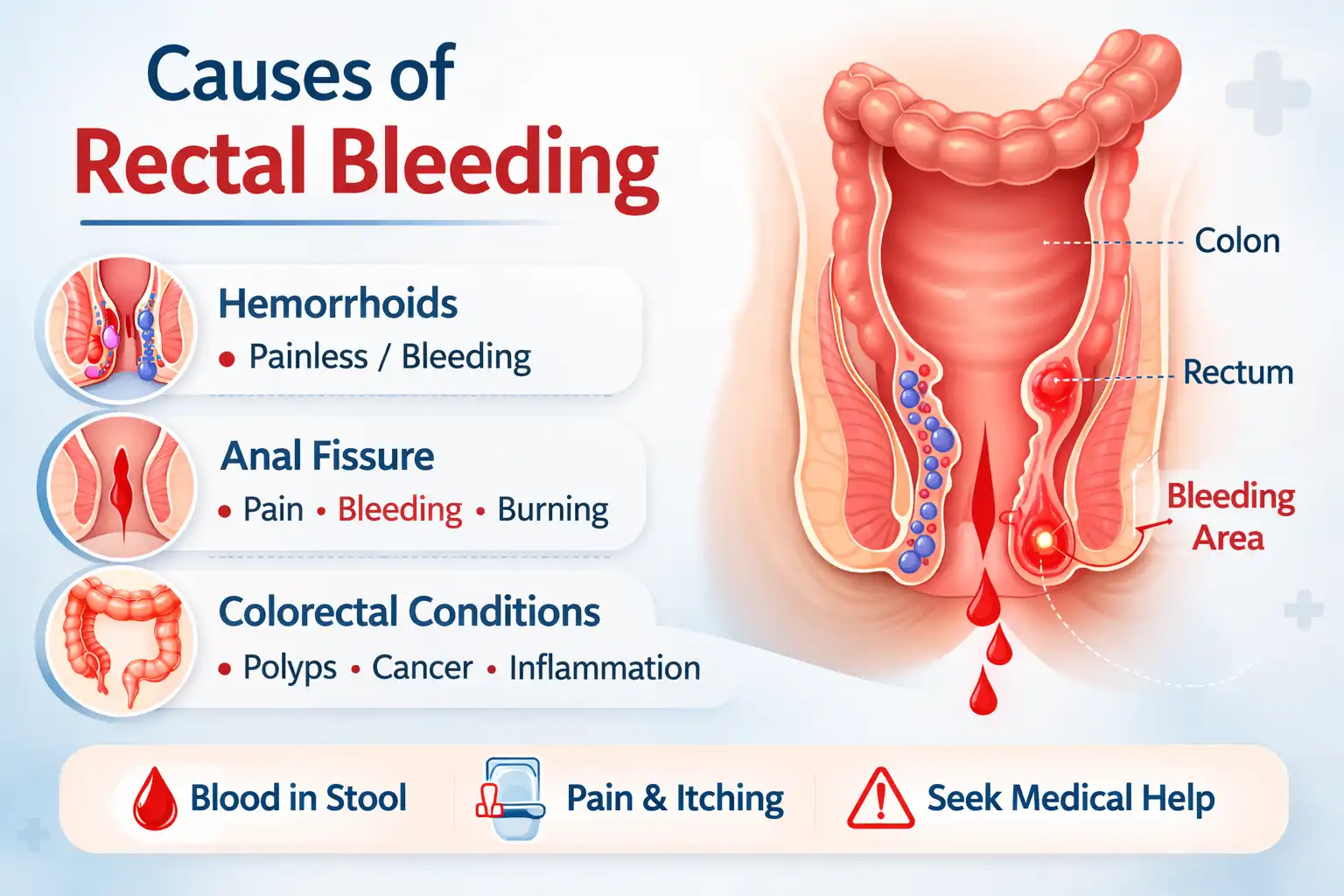
Treat rectal bleeding as a rectal bleeding medical emergency if: the volume is large — more than a tablespoon per episode, or bleeding that soaks clothing or the toilet bowl, the bleeding has not stopped after 20 to 30 minutes of lying down and applying pressure, you feel dizzy, faint, or extremely weak — signs of significant blood loss, there is dark red or maroon blood mixed in the stool (not just on the surface or paper), there is associated severe abdominal pain, or the patient is elderly, anaemic, or on anticoagulants.
These signs require immediate emergency department attendance, not a clinic appointment. For comprehensive piles care, rectal bleeding is always taken seriously regardless of assumed cause — piles, fissure, or otherwise.
How Does Emergency Rectal Bleeding Differ From Typical Piles Bleeding?
| Typical Piles Bleeding | Potential Emergency Bleeding |
|---|---|
| Bright red, small volume | Dark red, maroon or very large volume |
| On surface of stool or paper | Mixed through stool or filling toilet bowl |
| Stops within minutes | Continuous or recurrent over hours |
| No systemic symptoms | Dizziness, weakness, rapid heart rate |
| No abdominal pain | Abdominal pain, cramping, fever may be present |
Bright red blood on toilet paper is almost always haemorrhoidal or fissure-related. Dark red or maroon blood mixed in stool indicates a source higher in the gut — potentially more serious and requiring urgent investigation. See specialist consultation for any rectal bleeding that has not been formally assessed. Also see my detailed article on rectal bleeding diagnosis — piles or other causes.
Can Continuous Piles Bleeding Cause Anaemia Over Time?
Yes — absolutely. This is one of the most important and underappreciated complications of untreated piles. Piles bleeding is typically described as small amounts — a streak here, a few drops there. But when this happens daily over weeks and months, the cumulative blood loss is significant. Iron-deficiency anaemia from chronic haemorrhoidal bleeding is something I diagnose regularly in patients who come in complaining primarily of fatigue, breathlessness, or dizziness — not bleeding.
In these patients, the haemoglobin may be 8 or 9 g/dL despite the patient thinking of their bleeding as “minor.” The right approach is to treat both the anaemia (iron supplementation) and the source (the piles). See bawaseer ka ilaj for guidance on bleeding piles management. Kya aap thakawat, chakkar ya saans phoolne ki shikayat karte hain? Ye piles se anaemia ki nishani ho sakti hai.
What Should You Do if You Notice Rectal Bleeding for the First Time?
Note the colour (bright red vs dark), volume (small vs large), relationship to bowel movement (on paper, coating stool, or mixed in), and any associated symptoms. If bleeding is bright red, small volume, on toilet paper after defecation, with no other symptoms — book a non-urgent specialist appointment within 1 to 2 weeks. If any of the emergency signs are present — go immediately.
Also remember: in patients over 40, any new rectal bleeding should be assessed even if it seems minor — to rule out other causes including polyps or colorectal cancer. Piles are the most common cause, but not the only one. See piles or another anal condition and hemorrhoid treatment resources.
Rectal bleeding is always worth taking seriously — not with panic, but with appropriate action. Know the warning signs of a true emergency, act immediately when they are present, and seek proper specialist assessment for any bleeding that persists or has not been formally diagnosed.
🤔 Free Tool
Not Sure What Your Symptoms Mean?
Take our free 10-question symptom checker. Get an instant result — Piles, Fissure, Fistula, or Pilonidal Sinus — with treatment options and estimated cost.
▶ Free Symptom Check — Start NowUnder 2 minutes · Free · Instant result · No login required
Book Your Consultation
Got questions for Pakistan’s first laser proctologist?
WhatsApp me directly on 0333-2877351. OPD timings: Tuesday, Thursday, Saturday — 5:00 PM to 8:00 PM at Karachi Piles Clinic, in Hill Park General Hospital, Shaheed-e-Millat Road, Karachi. Consultation fee Rs. 2,000.
🔗 Related Articles
🔗 Related Articles