Karachi has a piles problem — and it is not a coincidence. The combination of Karachi’s climate, diet, work culture, and water quality creates almost perfect conditions for haemorrhoids to develop. As someone who practices best piles treatment Karachi has available, I see the patterns clearly every single day. Understanding why piles are so common here helps patients take the right preventive and treatment steps.
Why Are Piles So Prevalent in Karachi Compared to Other Cities?
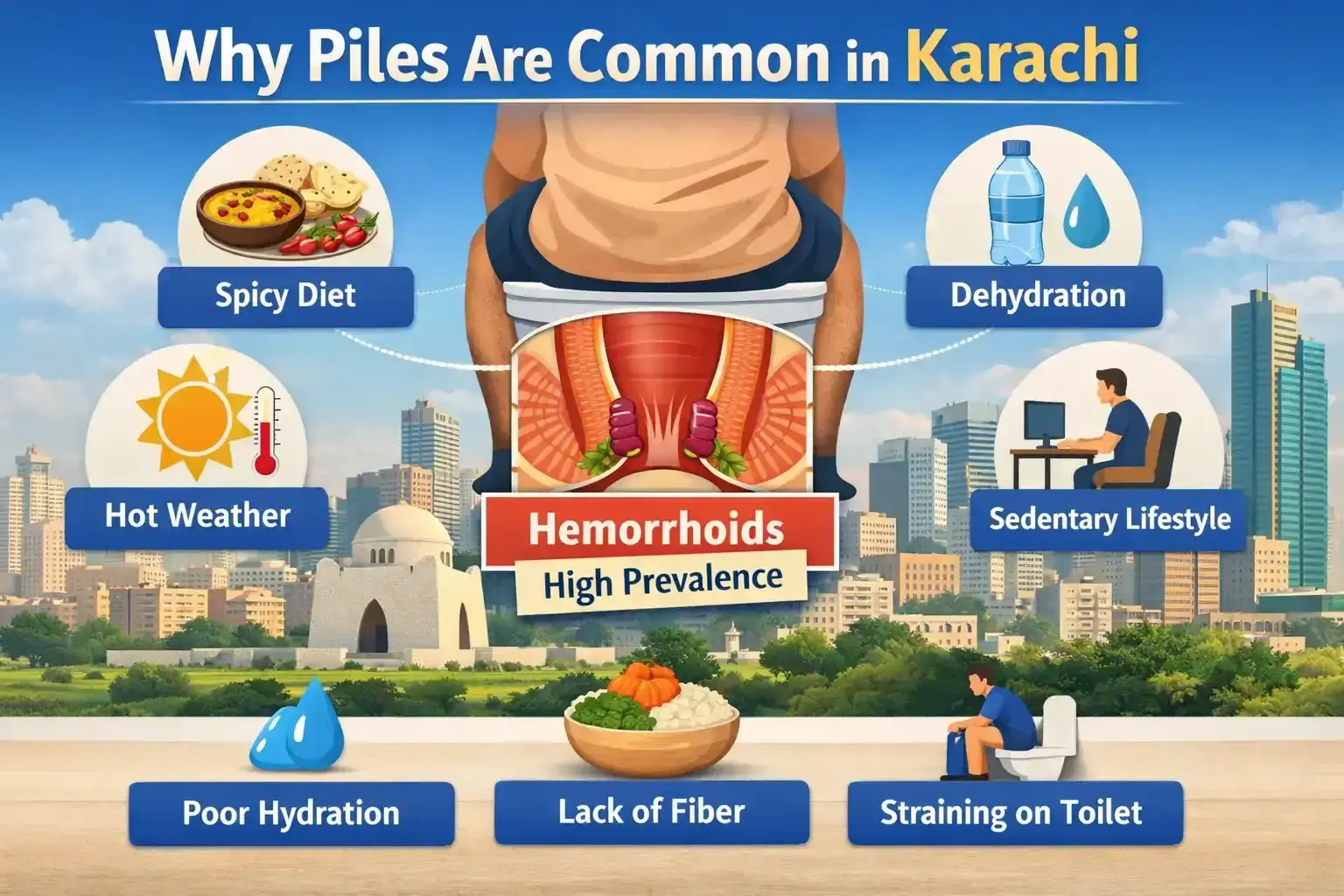
Several Karachi-specific factors combine to make haemorrhoids unusually common. The heat and humidity accelerate dehydration. The city’s diet is high in spicy, oily food and low in raw vegetables and fibre. Long commutes add 2 to 4 hours of sitting to already sedentary office jobs. And water quality issues discourage adequate water intake in many areas.
Add to this the cultural reluctance to seek treatment early, the pharmacy habit of self-medicating with creams, and the lack of awareness that piles have graduated treatments beyond surgery — and you have a city where piles are both very common and very undertreated. The best piles treatment Karachi patients need is accessible — but it requires knowing where to go and when. For comprehensive piles care, Karachi-specific risk factors are always part of the conversation.
What Karachi-Specific Risk Factors Contribute Most to Piles Development?
| Risk Factor | Karachi Relevance | How to Address |
|---|---|---|
| Dehydration from heat | Very high — especially May to August | 8 to 10 glasses minimum daily |
| Low-fibre diet | High — meat-heavy, vegetable-poor typical diet | Add ispaghol, fruits, salads |
| Long commutes + sitting | Very high — 2 to 4 hours daily in traffic | Stand and walk breaks at work |
| Spicy food | High — worsens existing piles during flares | Reduce during active symptoms |
| Delayed treatment seeking | Very high — cultural and embarrassment barriers | Normalise piles as a medical condition |
Addressing these factors does not require dramatic lifestyle change — it requires targeted, practical adjustments to daily habits. See bawaseer ka ilaj for Urdu-language Karachi-context guidance. Also see evidence-based piles therapy.
What Is the Best Piles Treatment Available in Karachi Today?
Karachi now has access to the full range of modern piles treatments — from in-clinic sclerotherapy and rubber band ligation for Grade 1 and 2, to laser haemorrhoidoplasty for Grade 3, and comprehensive surgical options for Grade 4. The best treatment is the one matched to your grade — and delivered by a specialist with specific proctology experience.
The gap between what is available and what patients access is the real problem in Karachi. Many patients still end up with pharmacy creams for Grade 3 piles — not because better options are unavailable, but because they do not know where to go. See specialist piles assessment, diagnosing whether it is really piles, and hemorrhoid treatment resources. Kya aap Karachi mein sahi jagah se treatment le rahe hain?
Piles are more common in Karachi than they need to be — and more undertreated than they should be. Understanding the city-specific risk factors is the first step. Accessing the best available treatment is the second. Both are entirely within reach.
🤔 Free Tool
Not Sure What Your Symptoms Mean?
Take our free 10-question symptom checker. Get an instant result — Piles, Fissure, Fistula, or Pilonidal Sinus — with treatment options and estimated cost.
▶ Check Your Symptoms FreeUnder 2 minutes · Free · Instant result · No login required
Book Your Consultation
Considering laser treatment? Let’s talk about your case.
WhatsApp me directly on 0333-2877351. OPD timings: Tuesday, Thursday, Saturday — 5:00 PM to 8:00 PM at Karachi Piles Clinic, in Hill Park General Hospital, Shaheed-e-Millat Road, Karachi. Consultation fee Rs. 2,000.
🔗 Related Articles