Bleeding from anus is one of the most alarming symptoms that brings patients to Karachi Piles Clinic. Anus se khoon — this is one of the most frightening symptoms a person can notice. I have seen patients who ignored it for months, and others who came to me the very next day in complete panic. Honestly, both reactions are understandable. But the truth is — not all rectal bleeding means piles, and not all rectal bleeding is harmless. Let me explain what I have learned from years of seeing these cases in Karachi.
Is Rectal Bleeding Always a Sign of Piles?
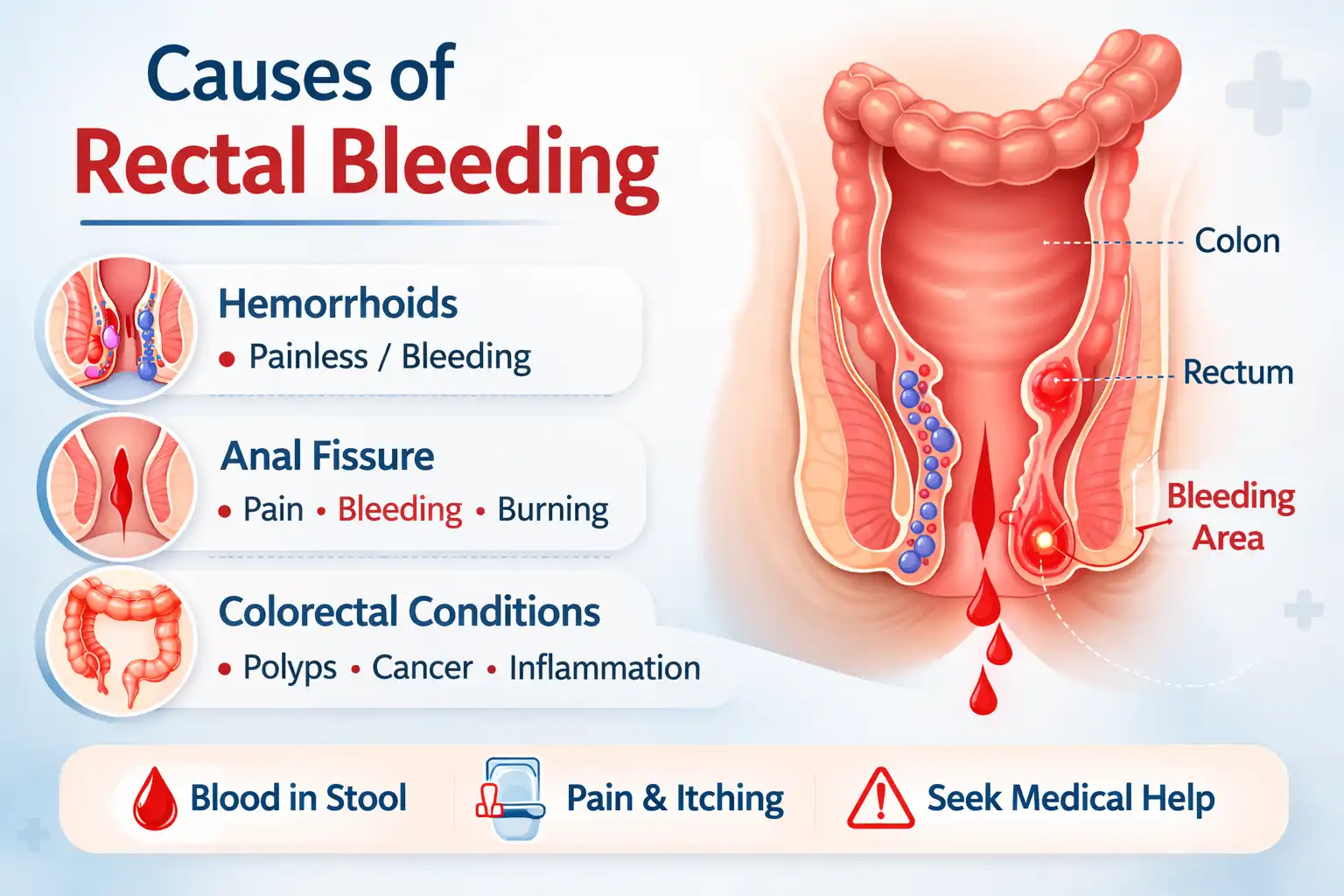
No — and this is something I want to be very clear about. Most people assume that any blood from the anus means bawaseer. In my experience, piles are indeed the most common cause. But there are several other conditions that also cause rectal bleeding, and some of them are far more serious than piles.
I have seen patients with anal fissures, rectal polyps, colitis, and even colorectal cancer who all came in saying “doctor, mujhe bawaseer hai.” Without proper examination, these conditions stay undiagnosed for too long.
What Does the Color of Rectal Bleeding Tell You?
Color actually tells you a lot. Bright red blood — fresh, on the toilet paper or in the bowl — usually comes from a source close to the anus. That is typically piles or a fissure. Dark red or maroon blood, or blood mixed into the stool, suggests bleeding higher up in the colon. And black, tarry stool is a sign of bleeding from the stomach or upper digestive tract — that is a medical emergency. For more on this, see our anal fissure laser service.
In my clinical practice, when a patient says “bright red blood, no pain, comes and goes” — my suspicion for piles is high. But I still examine them. Always. Because assumptions in medicine are dangerous.
What Are the Main Causes of Anal Bleeding Besides Piles?
There are several causes I commonly see in patients who come for a check on whether their bleeding is really piles after noticing blood:
- Anal fissure — a small tear in the anal lining. Usually very painful with bright red blood
- Anal fistula — an abnormal tract that can bleed and discharge
- Rectal polyps — small growths inside the rectum, often painless but they bleed
- Inflammatory bowel disease — like Crohn’s or ulcerative colitis
- Colorectal cancer — rare but possible, especially in patients over 40 with persistent bleeding
- Diverticular disease — small pouches in the colon wall that bleed
For professional piles treatment options and proper diagnosis, please do not delay your visit. See also more about innovative piles management that can help guide you.
When Should Rectal Bleeding Make You Seek a Specialist Immediately?
As a rectal bleeding specialist, I tell my patients — go to a doctor right away if you notice any of these warning signs:
- Heavy bleeding that does not stop after a few minutes
- Blood mixed into the stool — not just on the surface
- Rectal bleeding with fever, weight loss, or change in bowel habits
- Black or very dark stool
- Bleeding that has been going on for more than 2 weeks
- You are over 40 years old — risk of serious conditions is higher
- Any bleeding in a child or teenager
Kya aapko in mein se koi cheez mehsoos hui hai? Please take it seriously. Visit identifying symptoms correctly to understand when the situation is urgent.
How Does a Rectal Bleeding Specialist Diagnose the Cause?
When a patient comes to me with rectal bleeding, I follow a systematic approach. First, I take a full history — how long, how much, what color, any pain, any change in bowel habits, family history of colorectal cancer. Then I do a physical examination, including a digital rectal exam. Often, I also do a proctoscopy — a quick in-clinic procedure that lets me see inside the anal canal and lower rectum directly.
This whole process usually takes about 15 minutes. In my experience, most cases are resolved just by this initial examination. No need for panic — just proper, calm assessment. For more, see fissure healing protocols as fissure is also a common cause of such symptoms.
Can Rectal Bleeding From Piles Be Treated Without Surgery?
Yes — in early stage piles (Grade 1 and 2), bleeding can often be controlled with dietary changes, fiber intake, plenty of water, and topical treatments. But if the bleeding is recurring, persistent, or associated with prolapsed tissue, then a procedure becomes necessary.
In my opinion, laser procedures for bleeding piles are extremely effective. The recovery is faster, there is less post-procedure discomfort, and the recurrence rate is lower compared to old conventional surgery. For diagnostic clarity on whether your symptoms are really piles, an expert consultation is always the right starting point.
What Is the Connection Between Rectal Bleeding and Anemia in Pakistan?
This is something I see very often in Karachi — patients, especially women, who have been bleeding from piles for months or years and develop iron-deficiency anemia. They feel tired, weak, short of breath. They go to a general physician who gives them iron tablets, but nobody investigates the source of blood loss.
In my experience, treating the underlying anal condition resolves the anemia too. The body recovers iron levels on its own once the bleeding stops. So if you are anaemic and have any rectal symptoms — please connect the two and see a specialist.
Rectal bleeding is your body’s way of saying something needs attention. Do not wait for it to go away on its own — especially if it keeps coming back. Most cases are treatable. The key is getting the right diagnosis from the right specialist.
🤔 Free Tool
Not Sure What Your Symptoms Mean?
Take our free 10-question symptom checker. Get an instant result — Piles, Fissure, Fistula, or Pilonidal Sinus — with treatment options and estimated cost. For more on this, see our fistula laser procedure.
▶ Free Symptom Check — Start NowUnder 2 minutes · Free · Instant result · No login required
Book Your Consultation
Got questions for Pakistan’s first laser proctologist?
WhatsApp me directly on 0333-2877351. OPD timings: Tuesday, Thursday, Saturday — 5:00 PM to 8:00 PM at Karachi Piles Clinic, in Hill Park General Hospital, Shaheed-e-Millat Road, Karachi. Consultation fee Rs. 2,000.
🔗 Related Articles