Pregnancy brings many physical changes — and piles is one of the more uncomfortable ones that many mothers experience but few discuss openly. Pregnancy piles treatment safe options do exist, and managing haemorrhoids during pregnancy does not have to mean simply suffering until delivery. Let me explain what causes piles in pregnancy, what is safe to treat, and when to seek specialist care.
Why Are Piles So Common During Pregnancy and What Causes Them?
Pregnancy creates multiple simultaneous risk factors for haemorrhoids. Progesterone — the pregnancy hormone — relaxes the walls of veins throughout the body, making haemorrhoidal veins more prone to engorgement. Increased blood volume during pregnancy further engorges these vessels. As the uterus grows, direct pressure on the pelvic venous system impairs drainage. And constipation — extremely common in pregnancy due to progesterone effects and iron supplement use — leads to straining.
All of these factors combine to make symptomatic piles very common in the second and third trimesters. Most pregnant women do not need procedures — but they do need safe, effective pregnancy piles treatment safe strategies to manage symptoms until delivery. For comprehensive piles care, pregnancy-safe treatment is a specific category that requires specialist knowledge.
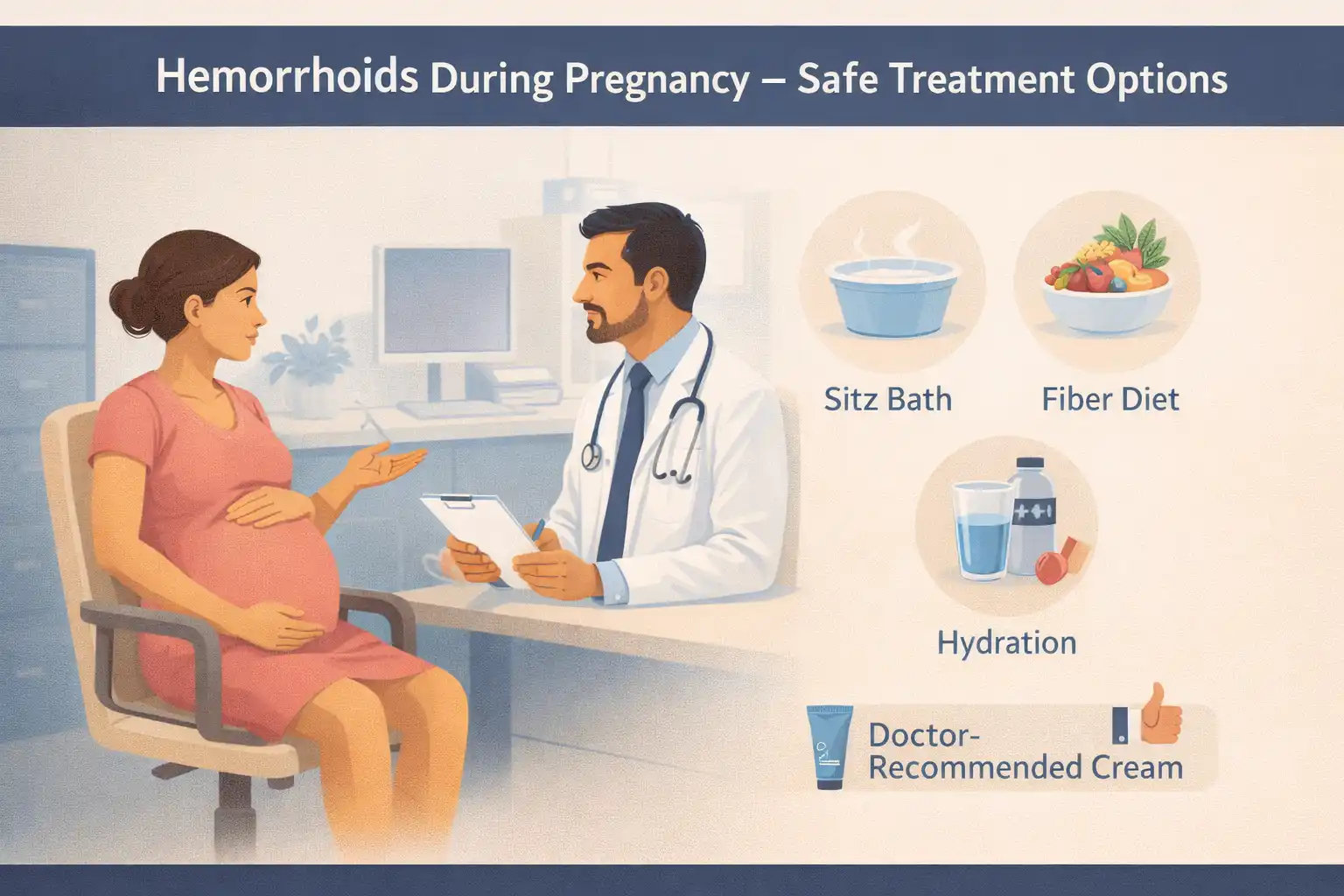
What Safe Treatment Options Are Available for Piles During Pregnancy?
| Treatment | Safe in Pregnancy? | Notes |
|---|---|---|
| High-fibre diet + hydration | Yes — first-line | Prevents constipation and straining |
| Warm sitz baths | Yes — safe and effective | Twice daily for symptom relief |
| Ispaghol (psyllium husk) | Yes — safe in pregnancy | Softens stool, reduces straining |
| Topical cream (local anaesthetic only) | Generally safe in moderation | Avoid steroid-containing creams |
| Rubber band ligation | Generally avoided in pregnancy | Can be done in extreme cases with specialist decision |
| Laser or surgery | Deferred until post-delivery | Anaesthesia risk in pregnancy |
The mainstay of management during pregnancy is conservative. Softening stool, avoiding straining, sitz baths, and appropriate topical relief cover the vast majority of cases. Procedures are almost always deferred. See consultation at Karachi Piles Clinic for guidance on when a pregnant patient needs specialist assessment. Also see bawaseer ka ilaj.
When Should a Pregnant Woman With Piles See a Specialist Rather Than Just Managing at Home?
See a specialist when: bleeding is heavy and not settling with conservative measures, there is a prolapsed pile that will not reduce manually, pain is severe and not controlled with simple measures, or symptoms are significantly affecting daily function or sleep. These situations require specialist assessment even during pregnancy.
Also — any rectal bleeding in pregnancy should be assessed to confirm it is haemorrhoidal in origin. While piles are overwhelmingly the most common cause in this demographic, other causes need to be excluded. A brief specialist consultation provides reassurance and a safe management plan. See evidence-based piles therapy and hemorrhoid treatment resources. Kya aap ke bleeding ka source confirm hua hai? In pregnancy, this matters.
Do Pregnancy Piles Resolve After Delivery or Require Treatment?
Many pregnancy-related piles improve significantly after delivery as the hormonal and mechanical factors that caused them resolve. Grade 1 and many Grade 2 haemorrhoids that developed during pregnancy often shrink substantially within 4 to 8 weeks postpartum. However, Grade 3 and 4, or piles that were pre-existing before pregnancy, are less likely to resolve fully and typically require treatment after delivery and after breastfeeding is complete.
I advise all postpartum patients: wait 6 to 8 weeks after delivery for initial assessment. If symptoms persist beyond that — consultation and appropriate treatment. See piles or another anal condition for postpartum symptom assessment.
Piles during pregnancy can be managed safely and effectively with the right conservative approach. You do not have to suffer through nine months of discomfort. With proper guidance, pregnancy piles treatment that is safe for mother and baby is always available.
🤔 Free Tool
Not Sure What Your Symptoms Mean?
Take our free 10-question symptom checker. Get an instant result — Piles, Fissure, Fistula, or Pilonidal Sinus — with treatment options and estimated cost.
▶ Start the Free Symptom QuizUnder 2 minutes · Free · Instant result · No login required
Book Your Consultation
Considering laser treatment? Let’s talk about your case.
WhatsApp me directly on 0333-2877351. OPD timings: Tuesday, Thursday, Saturday — 5:00 PM to 8:00 PM at Karachi Piles Clinic, in Hill Park General Hospital, Shaheed-e-Millat Road, Karachi. Consultation fee Rs. 2,000.
🔗 Related Articles